Hi Smart Community Friends,
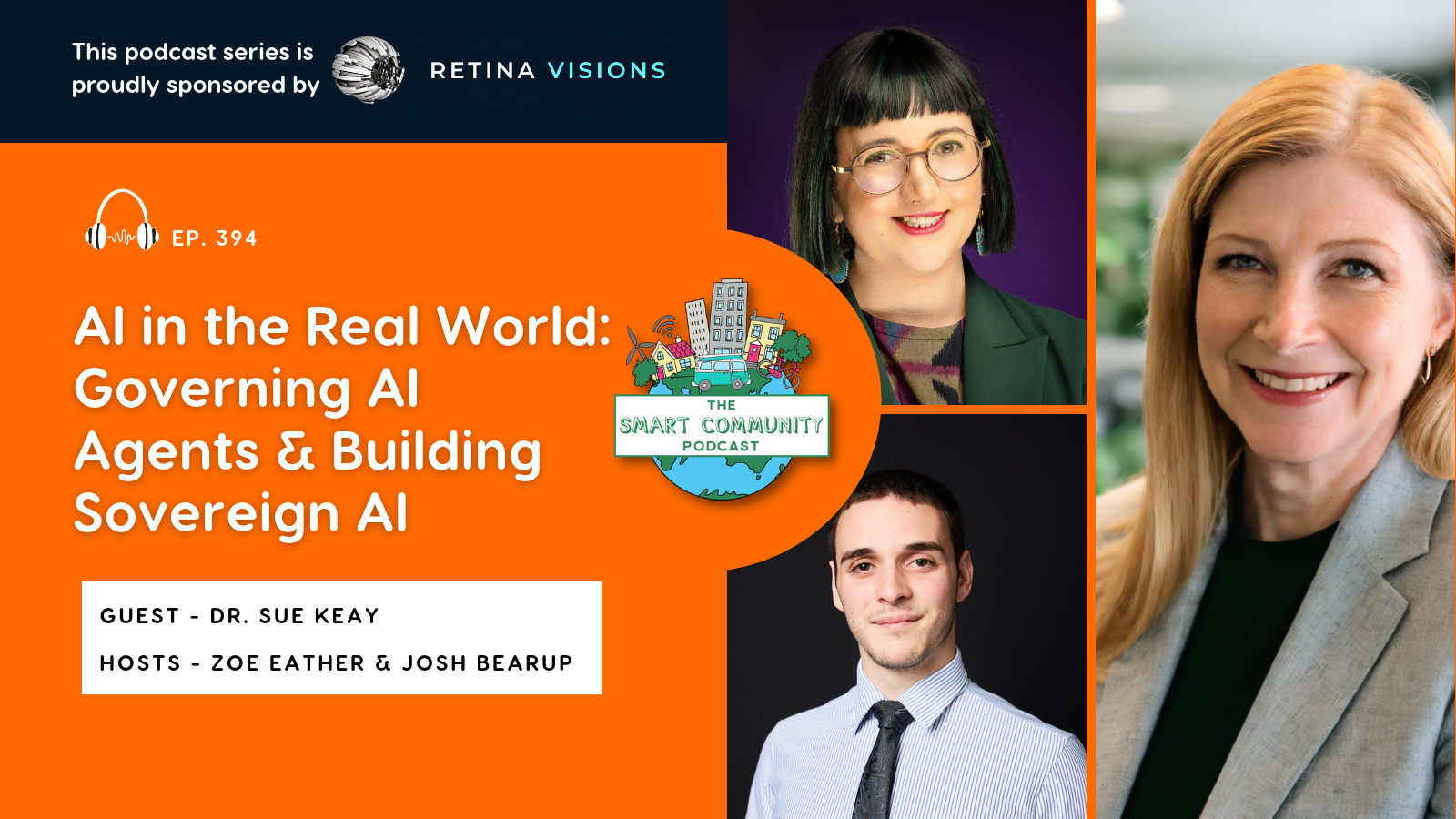
We are continuing our AI in the Real World series, and in this episode, Josh and I interview Dr Sue Keay, the director of the University of New South Wales Artificial Intelligence Institute and the chair of Robotics Australia Group.
Sue, Josh, and I talk about why it’s actually our most regulated industries, like finance, that are getting the most value out of AI right now, and why that comes down to having good data and well-understood business processes.
We discuss the Medicare compromise by OpenAI, how the safeguards we already have for physical robots could apply to non-physical AI, and why Sue believes Australia needs to be having a much bigger conversation about sovereign narrow AI models rather than entirely relying on US or Chinese frontier models.
We also get into AI governance and what it means to treat AI agents like staff members who need a manager, and why the question of who is accountable when an AI agent goes rogue is only going to become more important.
As always, we hope you enjoy listening to this episode as much as we enjoyed making it.
The AI in the Real World series is proudly sponsored by Retina Visions. Find out more at https://www.retinavisions.com/
What we cover in this episode:
- Why the scale and speed of AI change feels different now, and why some of the pressure to decide feels “artificially created”
- The reason highly regulated sectors are at an advantage when it comes to AI adoption: good data and well-understood processes
- Why getting your data and processes in order is the “boring” work that makes AI worthwhile
- How governments are approaching AI adoption, and the lingering caution after Robodebt
- How UNSW is balancing equity of access to AI tools, employer expectations and supporting its own staff
- The Medicare compromise by OpenAI, and why humans and cybersecurity professionals remain central to defence
- The challenge of rising personal risk from AI-enabled phishing and scams
- Lessons from regulating robots that could apply to non-physical AI
- What China’s AI regulation shows is possible, and the role of open weight models
- Why Australia needs a bigger conversation about sovereign narrow models, rather than reliance on US or Chinese frontier models
- AI governance: treating agents like staff, and why the person accountable is ultimately the CEO
- Practical advice: play with AI, use it as a coach, be wary of lock-in and future pricing, and bet on humans
Quote options:
“It’s actually our most regulated industries that are getting the most benefits from artificial intelligence at the moment. … If you spend the time and effort in the boring and reasonably unrewarding work of getting your data in order and making sure you understand your processes, then that’s where you are likely to get the best impact from AI.” ~ Sue Keay
“Robots are actually really well regulated, and I think we can learn some of what we know from making robots safe in the work environment, that I believe should be applied to non-physical AI.” ~ Sue Keay
“[AI is] not one thing. When we talk about it as if it’s one thing, you can’t actually have the right conversations about it.” ~ Zoe Eather
“If you don’t name someone accountable [for the AI agents] … the person who’s responsible is the CEO. That is where the buck stops.” ~ Sue Keay
“Building our own AI doesn’t necessarily mean we’re competing head-on with frontier models. We can probably do a lot without frontier models at all, but this just seems to be a conversation that’s not happening.” ~ Sue Keay
“Even having a sandbox, if it can access the internet, the sandbox is still the whole world. … It might not be able to access your internal LAN, but it’s got access to everything else.” ~ Josh Bearup
“That narrow piece is a really important conversation, not just about the sovereignty, but also around the sustainability and the compute power and the energy that we’re using as well, if we are more focused in our application of AI.” ~ Zoe Eather
“[AI Agents should have] dedicated managers who understand the job that the agent is supposed to do, that actually essentially do performance reviews on them, make sure that they’re actually operating in the way that they’re intended to.” ~ Sue Keay
“The only thing that you can put in place to make sure that that is handled appropriately is asking the what ifs and doing the risk management and understanding the blast radius of what those agents are able to do within the environment that they’re put in.” ~ Josh Bearup
Links:
- Dr Sue Keay, UNSW staff profile
- Magnifica Humanitas (Pope Leo’s AI encyclical, Vatican)
- How an OpenAI “agent” hacked Australia’s Medicare (Al Jazeera, 24 Sep 2026)
- Father Paolo Benanti & The Hon Dr Andrew Leigh MP Address the National Press Club
- Anthropic’s reported losses: Anthropic’s 2025 operating loss (Reuters report via Unite.ai)
Connect:
Connect with me via email: hello@mysmart.community
Connect with My Smart Community via LinkedIn or YouTube.
The Smart Community Podcast is produced by Ellen Ronalds Keene from PERK Digital
This podcast is recorded on the traditional lands of the Kabi Kabi peoples and edited on the lands of the Gaibal peoples. We pay our respects to Elders past and present and extend that respect to all Aboriginal and Torres Strait Islander peoples listening today.